
Parents in Madrid: Arturo Garcés – May 2017
Welcome to Kids In Madrid’s Parent of the Month section, where we interview Spanish parents that are bringing up their children bilingually. Delve into their daily routines and pick up tips!

Welcome to Kids In Madrid’s Parent of the Month section, where we interview Spanish parents that are bringing up their children bilingually. Delve into their daily routines and pick up tips!

It’s that time of the year when parents have to think about camps for their children. We hope to help you choose the camp that is right for your children as we present some of the best camps going on in Madrid this Easter and summer. Click on each image or link for more information or go to our camps page for all listings. THEATRE SUMMER CAMP WITH FACE 2 FACE Face 2 Face is an educational theatre company made up of a team of theatre and education professionals. KIDS ENGLISH CLUB: 100% ENGLISH CAMPS DURING EASTER, SUMMER AND CHRISTMAS The Kids English Club camps follow the model of immersion learning and practice where all camp activities and projects are carried out strictly in English. EASTER, SUMMER AND CHRISTMAS CAMPS WITH CRECE BIEN Is it important for a child or teenager to know how to manage their anger, fears or sadness? Would you like your children to improve social skills like communication, empathy, or assertiveness? If yes, then you will love Crece Bien. THEATRE SUMMER CAMP WITH ACT OUT This summer Act Out will be offering our Summer Camp during June and July. From Monday to Friday your children will be immersed in a world where they will discover English through Theatre. ENGLISH SUMMER CAMPS WITH MELTON LANGUAGES Melton Language Services offer two types of summer camps: one for children aged 4-18 years that focuses on fun activities with a didatic base, and their second camp types are Intensive Specific English Course for Young Adults 2017 (ages 13-14 and 16-18 years) . MINI GUIRI SUMMER CAMP WITH LAE KIDS LAE Kids is offering a fun-packed, exciting and Spanish-filled two-week Mini Guiri Summer Camp in July 2017. Your Peques will spend their days painting, cooking, dancing and getting their hands dirty, while at the same time learning Spanish with its proven methodology. And other fun-filled camps: ¿Quién Soy Yo? A summer camp designed specifically for adolescents. English-On-The-Go urban summer camps offer traditional style camps in the heart of Madrid. Don’t forget to check our Camps page for all listings.
Get to know some multilingual families in Madrid with our blog posts.
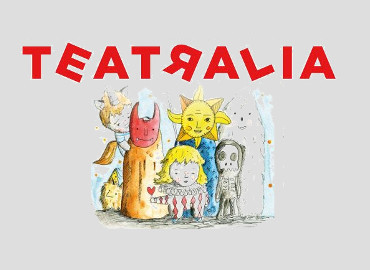
Welcome to Teatralia! Children’s drawings are a mystery that many people struggle to understand. Vigotsky observed that young children first draw and then assign a title to their work. As childhood progresses, the order is reversed and the concept, the title of what one wants to paint, is first conceived, and then drawn. There are therefore two essential forms of creation: the part of the idea, the abstract, and the one that begins in matter, the concrete. To compose the Teatralia program two methods have been combined: a preconceived essential idea, to show the public of the Community of Madrid the best stage in the world, and the concrete and tangible works of the artists involved. With this idea and the artistic proposals an untitled drawing has been made. Do you give it a name or look for the thread that connects the 24 scheduled works? Titles can be reductionist and constrain a world of images; Or they can drown the poetics in the logic of words or sink what is suggested in a sea of evidence. Looking at the thread then. Try to remember the time before reality being petrified and immovable, that blissful and dazzling time that sometimes flashes back – childhood. Weave in an exercise of dissociation and association and search the barely perceptible thread that is born, like the human voice, in the Grotto of the Throat and arrives at Nothing of adolescents who seek the sense of being. The established order of Hansel and Gretel has been reversed and we enter with them in the forest, “the first theatre of our fears”, a symbolic space that connects us with that of Alice in Wonderland. There is no Cheshire Cat smiling, he has been wiped out the in the war in Wonderland in the Land of Miseries. Joy, the word of Gloria Fuertes celebrates the birth of this Madrid poet. And with that joviality we have Enchantés where people dance barefoot or, perhaps, with shoes manufactured by The cobbler and the elves. There is Shakespeare but in a different way: Pocket Romeo and Juliet mix love and comedy with an unhappy ending. Love releases the young Marvin from the repressive environment in which his school days pass. Sailors navigate hostile seas to chase the white whale of Moby Dick and, once on land, trace Footprints to reach the Northern Lights of Elisapi. A classic tale – Lamp, Pea and Pen – with lullabies and Calderonian verse. After spinning and reheating invisible threads, the program of a festival that is now 21 editions is woven and brings the best theatre for children and young people from the Community of Madrid to the world; Because Teatralia wants to reach everyone. The drawing is complete. Was it a hat or boa that ate an elephant? It is up to you to name it. Website: Madrid.org Webpage for event programa Follow our blog to stay up to date with the latest events in Madrid.

Here at Kids in Madrid we were lucky enough to have been sent some brand new products by My Gecko Box to review. We spent a fun filled afternoon making the crafts and reading factsheets about underwater creatures and pirates.

Whether you are visiting Madrid or live here when you discover the wide range of museums you can visit, your face will light up just thinking about the possibility of going to any of them. But, if you stop and think a few minutes …. Uff, which one to choose, when to go, at what’s the best time?

Welcome to Kids In Madrid’s Parent of the Month section, where we interview Spanish parents that are bringing up their children bilingually. Delve into their daily routines and pick up tips!

Temper tantrums. Just the thought of one is enough to make you cringe.

From all the species that populate our planet, humans are considered the most sociable one.

Can English games be played by Spanish children and their non-English speaking parents? The answer is “yes”! From playing “snap” with picture cards, to outdoor games such as British Bulldog, there is no reason to be language-shy when having fun! Games for infants “I spy” – I play a bilingual version of “I spy” where I say “Veo, veo the door” and the children have to shout “puerta”. This basic game helps with vocabulary recognition. With children who have a more advanced understanding of English, the game can be played the other way around – “I spy la puerta”, to which they have to find the English equivalent. “hot and cold” – this simple game has children looking for an item that has been hidden in the room. When they get close to where the item has been hidden you let them know by saying “hot, hot, hot” and when they are far away then you repeat “cold, cold, cold”. Once they have got the hang of the game more vocabulary can be introduced like “closer”, “up”, “down”, “underneath” etc. Games for primary-age children “Chinese whispers” – this is a fun game to play with a group of primary-aged children. Get the group to sit in a circle. You whisper a simple sentence in the ear of the child nearest to you (“Today is Monday”) and then that child whispers what she heard to the person sitting next to her and so forth until the whispered sentence returns to you. The likelihood is that you will hear something rather different to the original phrase! “Mr Crocodile” – have the children stand in line and ask them to take one step forward if they can answer Mr Crocodile’s question correctly. Then stand ten paces in front of the children and ask them to repeat “Mr Crocodile, Mr Crocodile, can I cross your river?” to which you reply saying “Only if you are wearing something red/blue/stripy/spotty/etc.”. The first one to reach you is the winner. Other versions of the game have all the children wearing “red” walk towards you and those not wearing red running as quickly as possible to avoid being caught by “the crocodile” (you). Any child you catch is out of the game. The last child to survive is the winner and becomes the next Mr Crocodile. KIM games appropriately named considering the webpage that hosts this blog (!), the acronym KIM stands for “Keep in Memory”. The two most popular KIM games I play with children are the Scouts version or the Spot the difference version. a) “Scouts KIM game”: Children playing this game must be able to read and write. I set out several items on a table and cover them with a cloth. I then usually show flash cards which include all the items on the table plus a few more similar things (it could be fruit, shapes, tools, toys, – whatever vocabulary the children are learning at the time). Once I am sure the children know all the words, I then uncover the cloth for 30 seconds so that the children can see what is on the table. Once the items have been covered again I ask them to write down what they saw. Ideally the children will write their list in English but if it comes out in Spanish that is OK as long as the rest of the group help them remember what the item remembered is called in English. The child who remembers the most items in English is the overall winner, but other winners include the child who remembered the most items (even if they write the list in Spanish) and the child who helps his classmates remember the names in English. b) “Spot the difference KIM game”: Here I ask the children to spend a few minutes looking around the room we are in. I then ask them to leave the room for a couple of minutes. I rearrange the room (and sometimes change something about myself too – take my glasses off or put a cardigan on) and ask them to come back in the room. From youngest to oldest I ask them to spot one difference at a time. One-to-one games Quite a few board games can easily be used to practice English at home. I have found dominoes, Snakes & Ladders and ludo excellent for practicing counting in English; whilst “Who’s Who” and “Operation” are always fun to play, especially when your children are learning the parts of the body at school. The KIM games and the “hot and cold” game can be adapted for one-to-one use too. I recently signed up to the mailing list of homeenglishteacher.com and I really can’t recommend it highly enough. The author shares my opinion that it doesn’t matter if you speak to your child in English with an accent – who cares? As long as you and your child can speak good, proper and correct English, the accent really isn’t such a big deal. Go on, what are you waiting for? Follow our blog to stay up to date with the latest events in the life of Madrid.